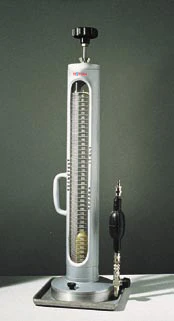
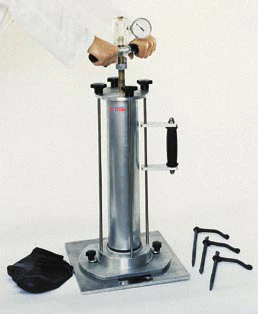
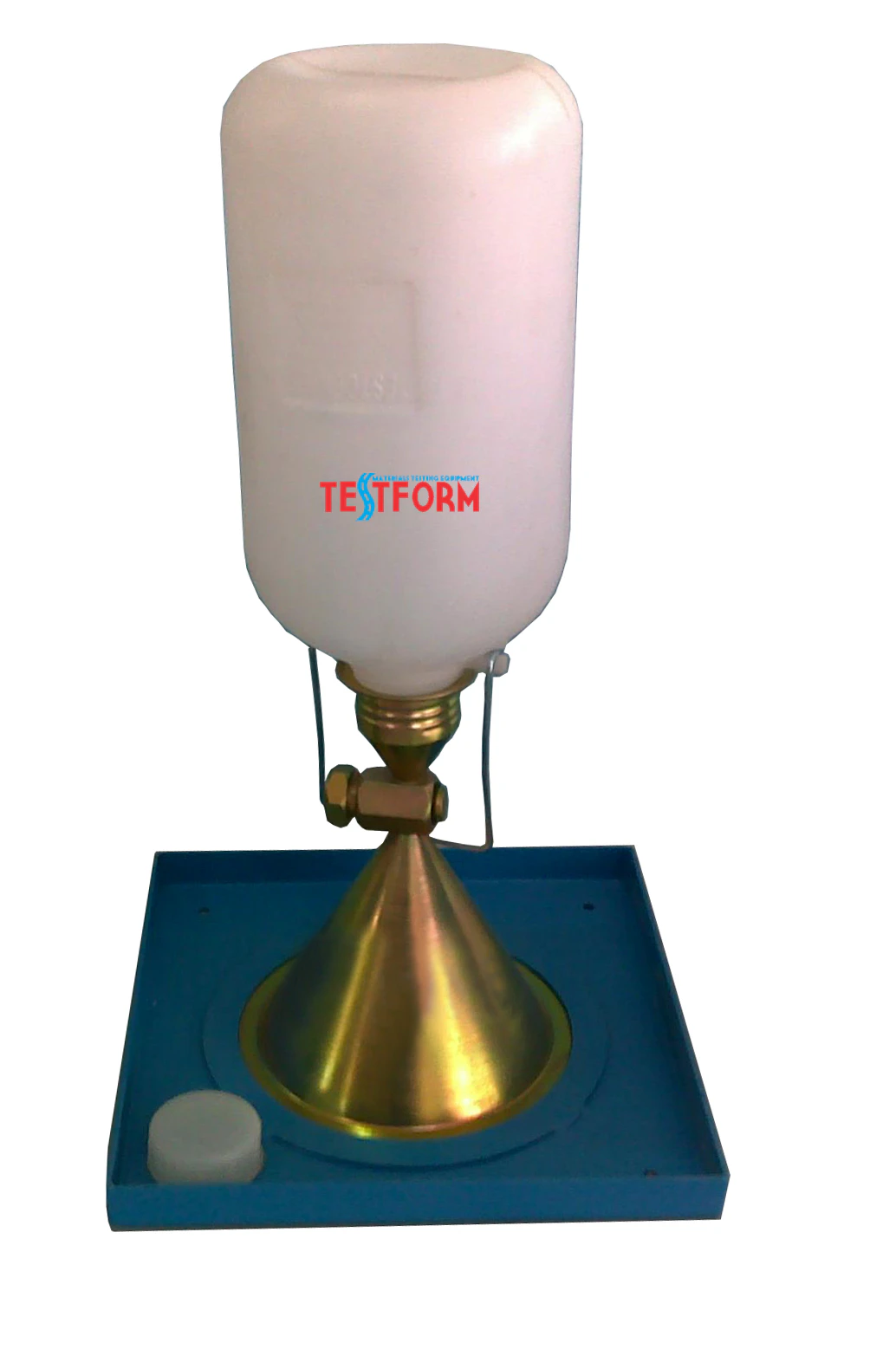
Compression Setting Device - Pulley Method
Product Code: SL232
Categories:
It is based on the principle of mechanical volume replacement and excavation.
It is reliable in coarse-grained soils.
Application of the Test (Step by Step)
- Surface Preparation: The compacted soil surface where the test will be conducted is leveled.
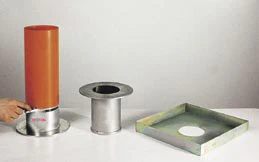
- Placement of the Ring: The steel test ring, with a specific diameter and height (volume), is firmly secured to the ground.
- Excavation of the Soil: Within the inner boundaries of the ring, the soil is carefully excavated to a specific depth. Care is taken to ensure that the walls of the excavated hole do not collapse.
- Weighing the Sample: All the moist soil removed from the hole is collected and weighed on a precision scale to determine its natural mass (M).
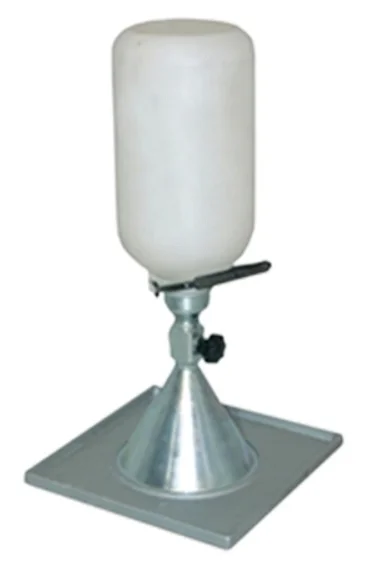
- Volume Determination: To measure the exact volume (V) of the excavated hole, it is filled with a standard material (usually calibrated fine sand or a flexible membrane containing liquid). The ring prevents overflow during this process and defines the volume limit.
- Moisture Determination: A sample is taken from the excavated soil, dried in an oven, and the water content (w) of the soil is determined.
Calculation Method
Using the obtained data, the in-situ density values of the soil are calculated with the following mathematical relationships:
- Natural (Moist) Density (ρ):
- Dry Density (ρd): It is the parameter that actually indicates the degree of compaction.
By comparing this obtained dry density value to the Proctor maximum density from the laboratory, the Compaction Percentage (Relative Compaction) is obtained. In projects, this value is generally required to be at least 95% or 98%.