Fatigue Test - Rotating Rod Bending Fatigue Testing Machine
Product Code: FatigueTest-RB
Standard: ISO 1143, ASTM STP 1548, EN ISO 15630-1
Fatigue Test
The fatigue test analyzes the behavior of materials under the stress of variable loads. Typically, two loads are applied to a material - a constant mass load (for example, zero) and an alternating load. These loads are cycled and measured until the material breaks. This brittleness of a material under fatigue is called fatigue life.
Fatigue degradation (fatigue life) is not limited to metals and most engineering materials (ceramics, composites, aggregates, etc.) are susceptible to fatigue damage. The strength of materials is a measure of their resistance to deformation such as being stretched, bent, etc.
Description
Different samples show the effect of notches and surface quality. Moving parts and machine parts are often subjected to periodically fluctuating loads. Even if the dynamic load is well below the static load capacity, this load can cause the component to break after a long time due to material fatigue.
The fatigue strength and fatigue strength of components are determined in fatigue strength tests or endurance tests. The FatigueTest-RB device provides the basic principles of fatigue strength testing and the creation of a Wöhler diagram.
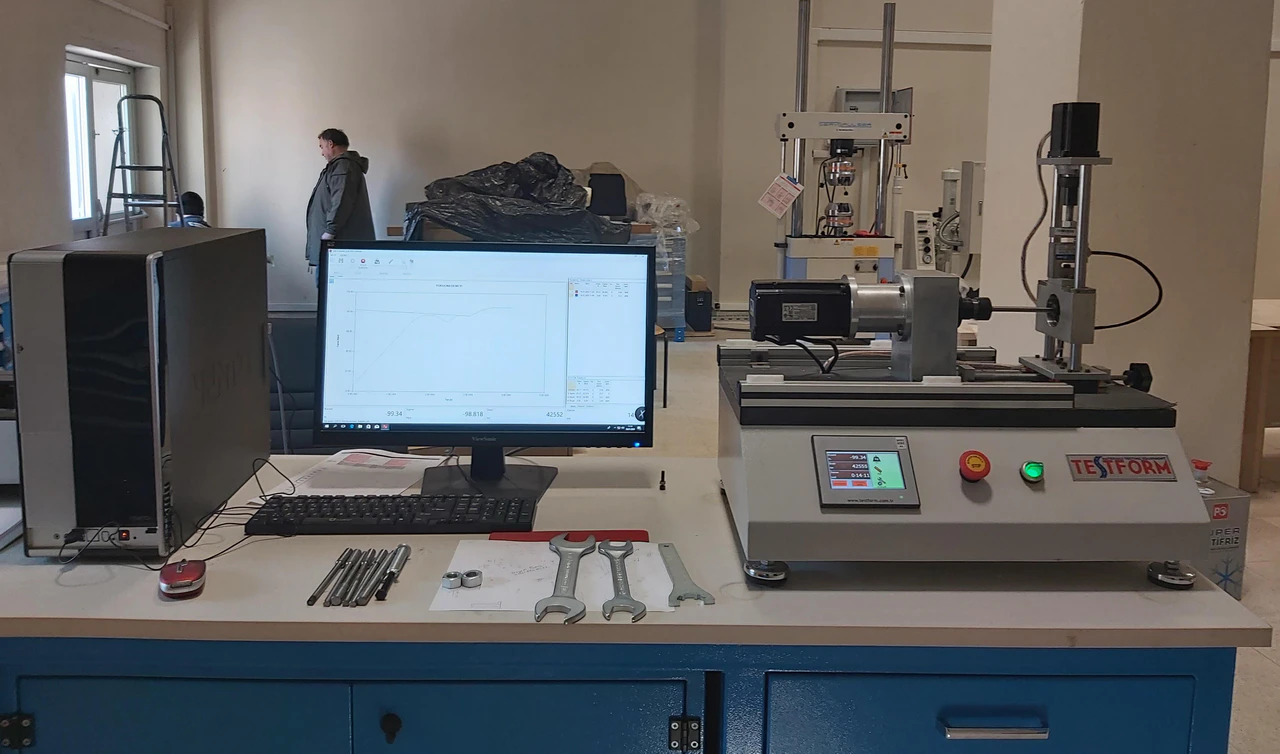
In the experiment, a cantilever-mounted and rotating cylindrical specimen is subjected to a single force. The load on the specimen corresponds to a bent cantilever beam. The specimen is subjected to pure reverse bending stress and breaks after a certain number of load cycles due to material fatigue.
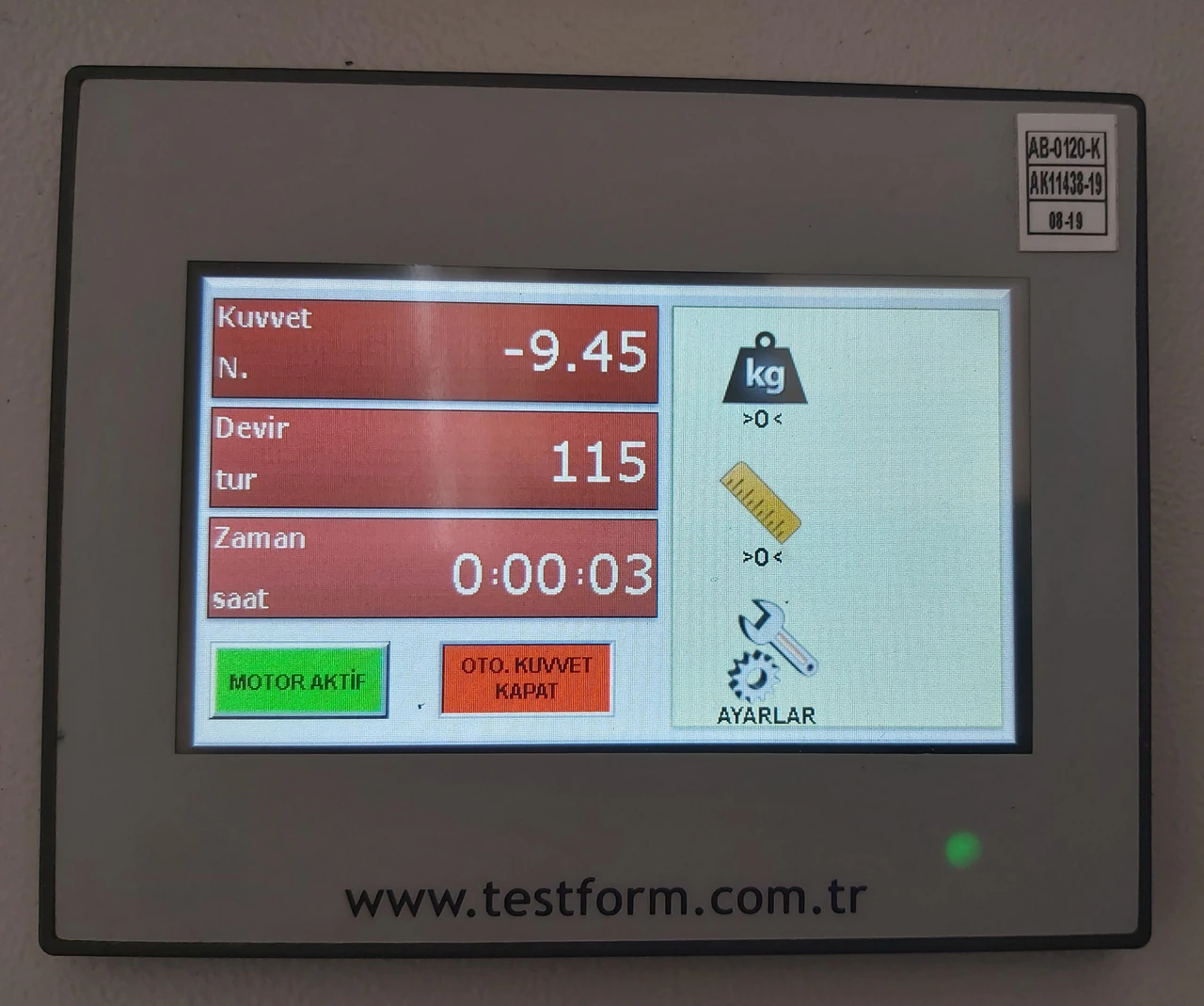
In the load application device, the required force is created by a spring balance and a movable support. The load amplitude can be continuously adjusted using the preload of the spring balance via a flexible shaft. An electronic counter records and digitally displays the number of load cycles.
The impulse for the counter is provided by an inductive approach switch on the motor coupling. The counter can also be used to measure the speed. When the specimen breaks, the servo motor stops automatically. The protective guard protects against flying parts.
To show the notch effect and the influence of surfaces, the specimen dimensions vary according to user requirements. Using the FatigueTest-RB system for data acquisition, the measured values can be transferred to a computer where they can be analyzed with software.
Technical Information
Electric Motor
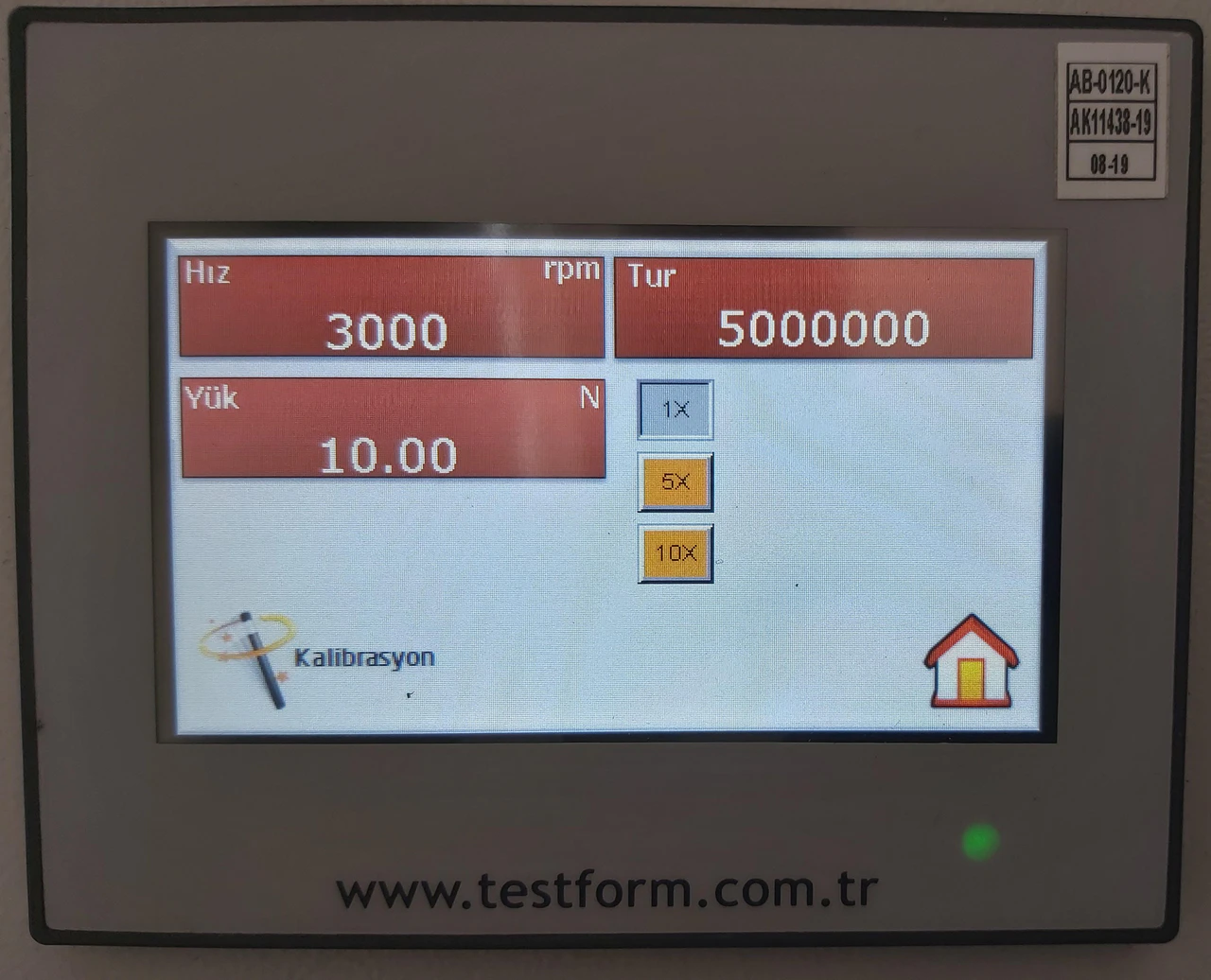
- Speed: 3000 RPM
- Power: 0.75 kW
Load Force
0... 2000 N
Electronic Display
- Touch screen
- Speed setting and counter are defined and adjustable on the screen
Specimens
- Material: steel Ck35
- 3 different specimen types or in desired dimensions
Power Supply: 230V, 50Hz, 1 phase
Dimensions: LxWxH: 840x410x600mm
Weight: Approx. 31kg
Electronic Data Collection
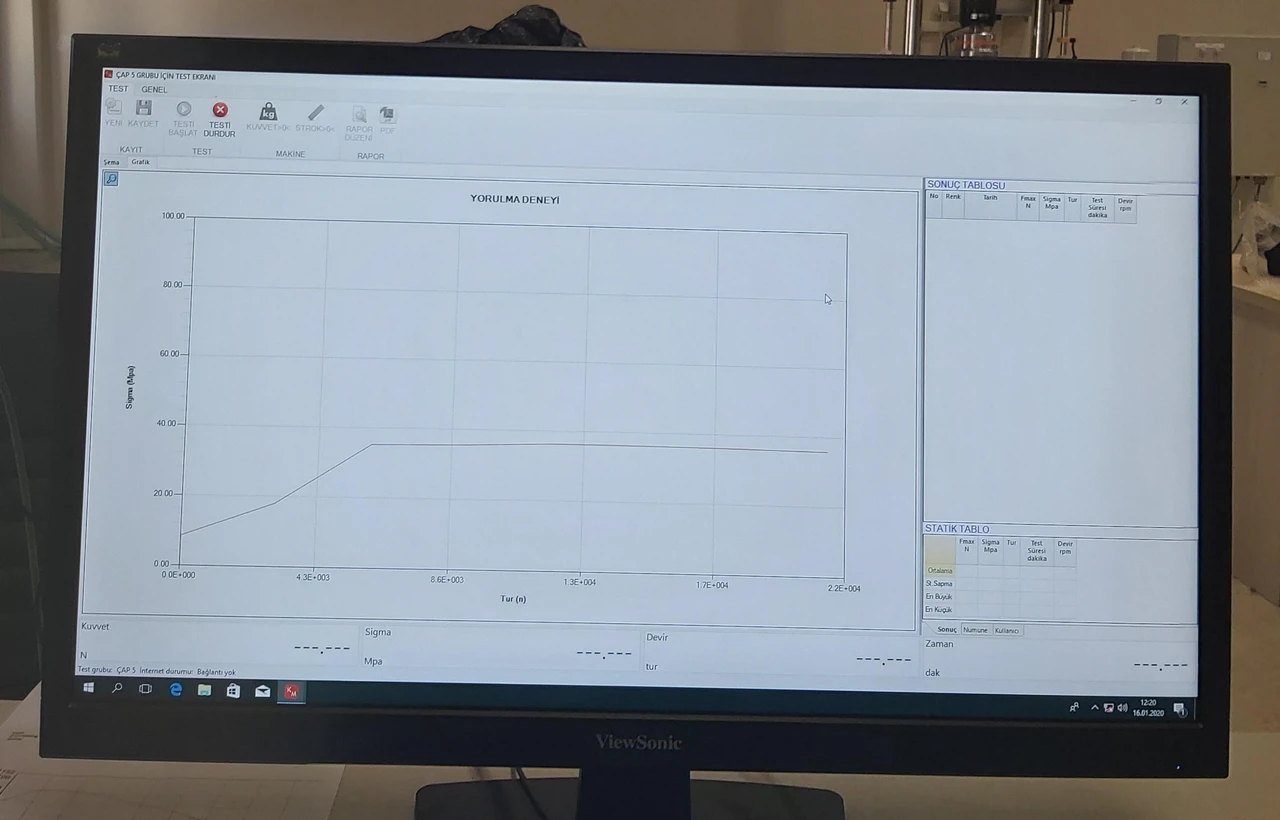
The electronic data collection and evaluation software for bending fatigue tests (fatigue strength test) records measurement values for force and number of measurements until the test specimen breaks (number of load cycles).
The stress-strain curve is calculated using this data and displayed in color on the computer screen. The curves can be saved and printed.