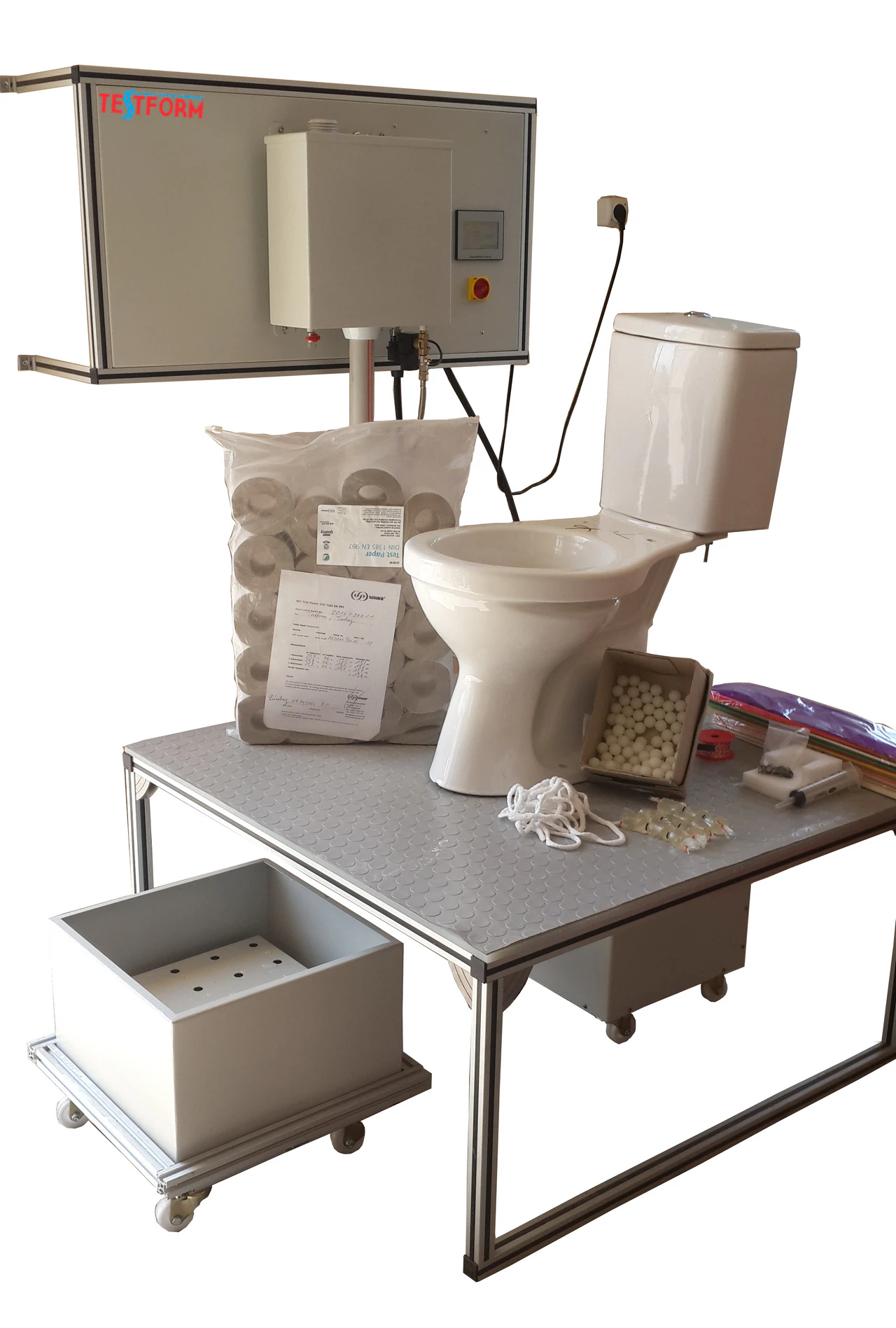
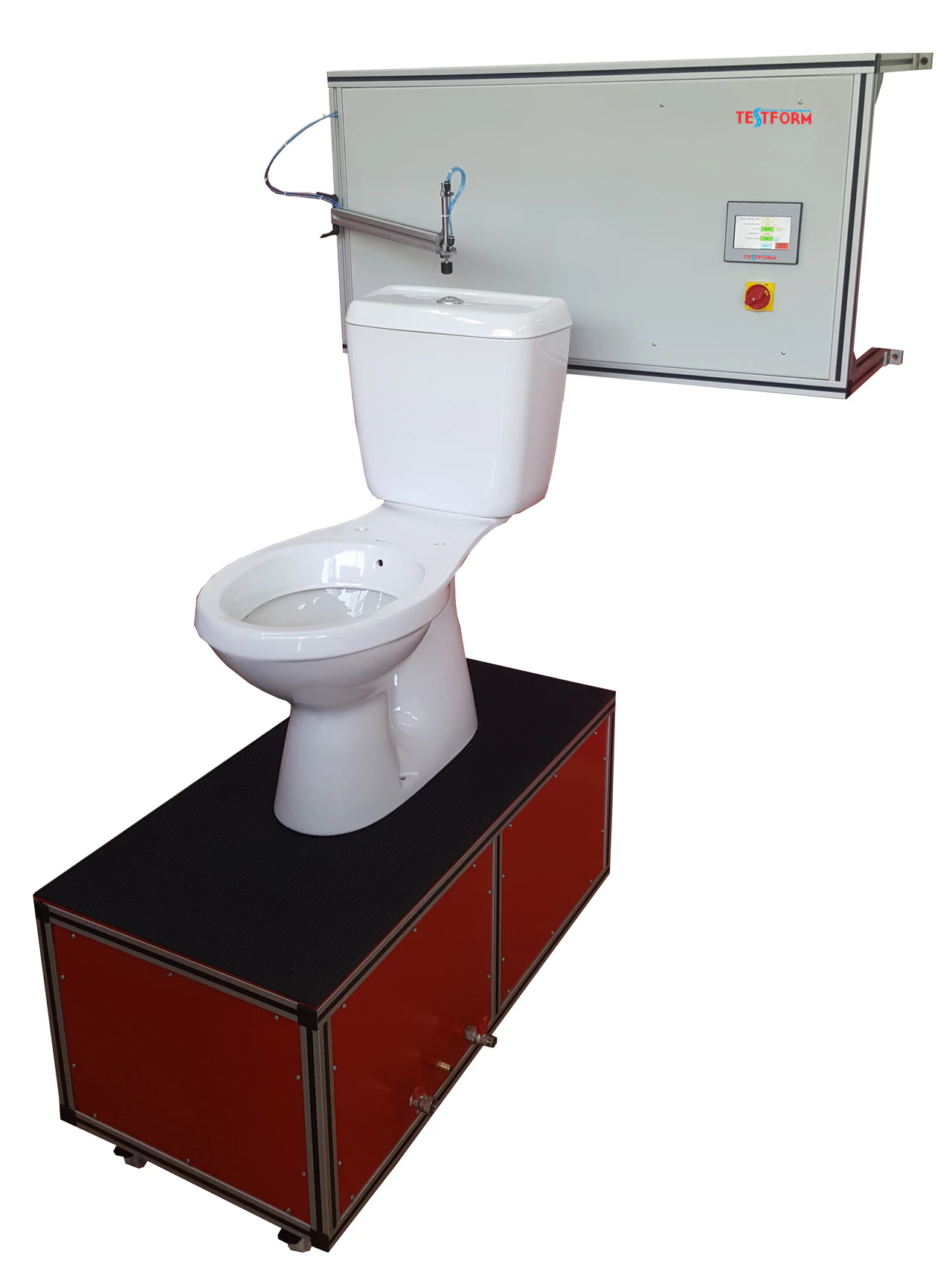
Relief valve reliability test
Product Code: EN_997.4
Categories:
Standard: EN 997
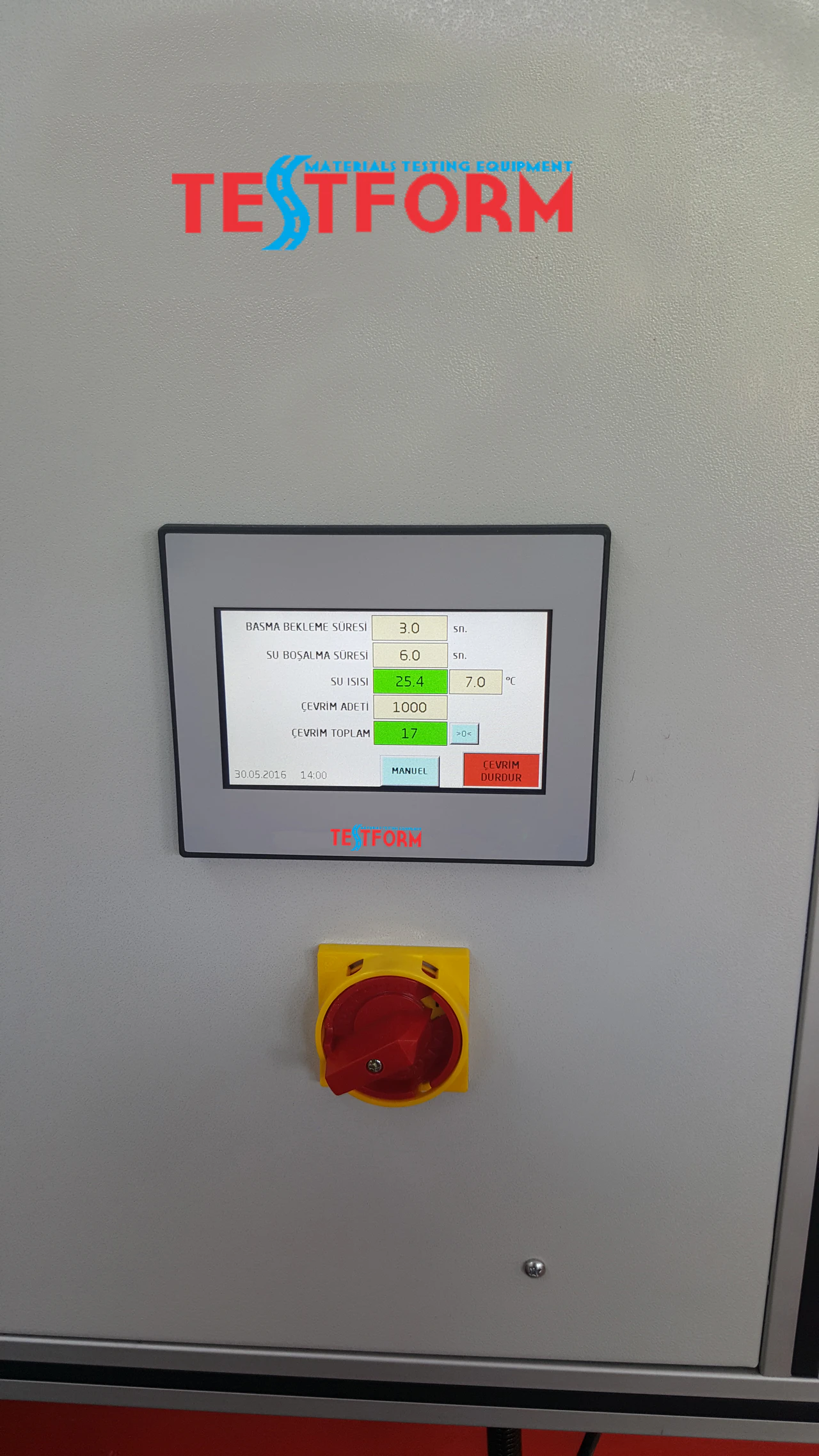
5.7.5.4 Discharge Valve Reliability Test
5.7.5.4.1 Test Setup
The test setup includes the following:
- A reservoir equipped with a discharge valve and to be filled via a filling valve or, alternatively, a filling device to accelerate the test,
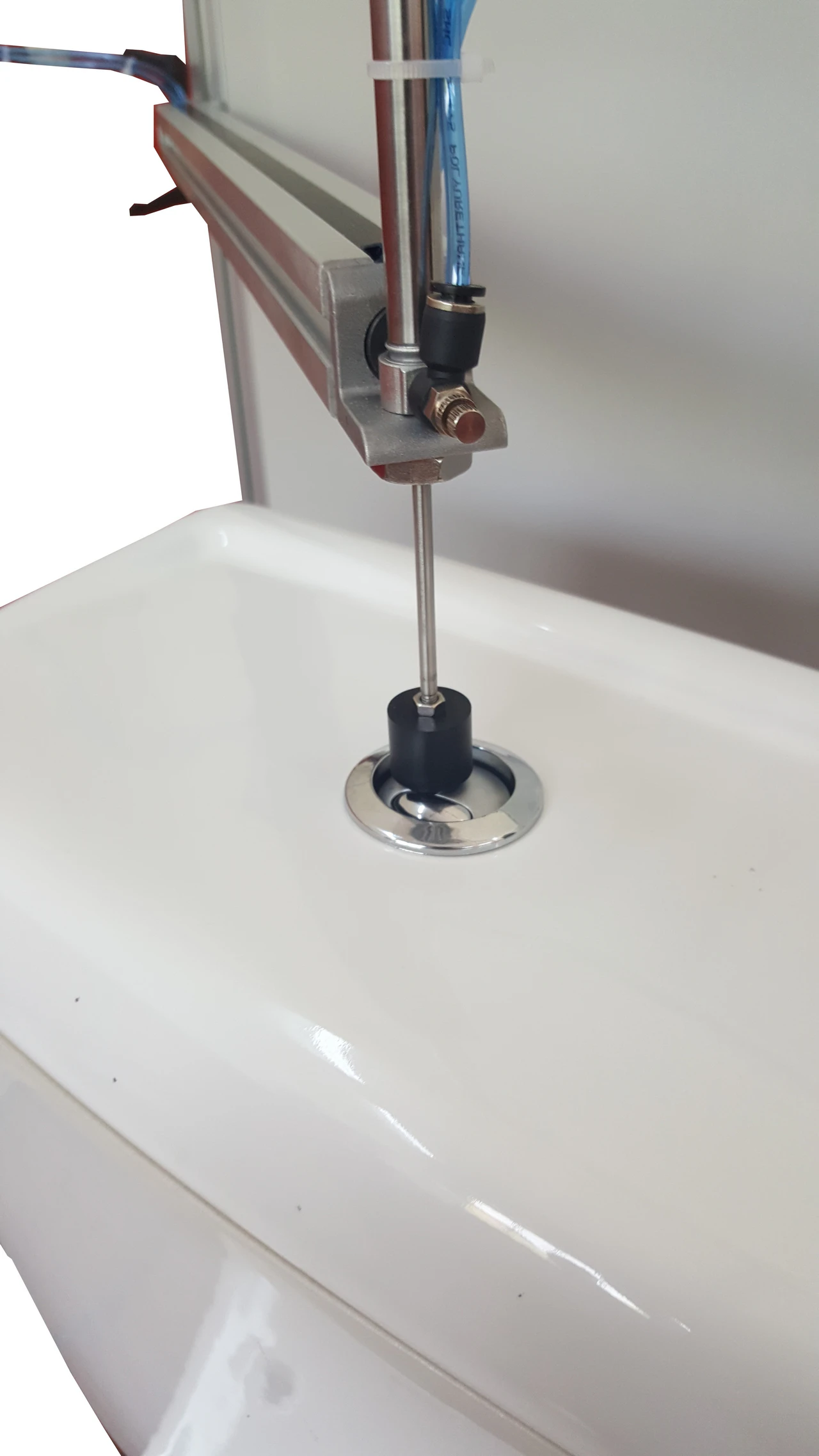
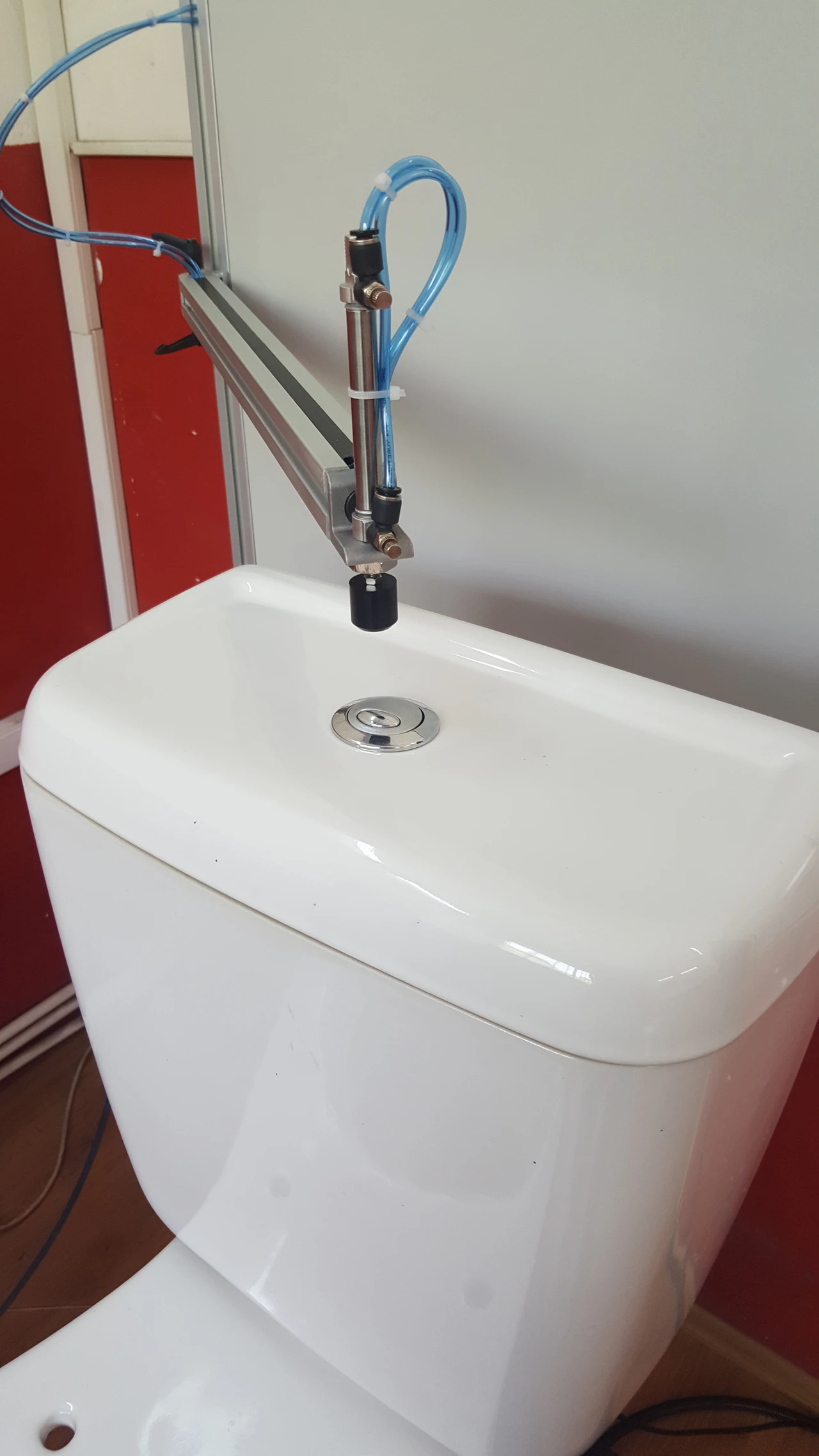
- An automatic system that ensures the washing mechanism activates with a controlled force between 25 N and 30 N and an acceleration of 5 cm/s within a time interval of 0.5 to 1 second. The system must ensure that the valve is completely closed before the reservoir is refilled.
- Water with a temperature between 7°C and 25°C.
5.7.5.4.2 Test Procedure
A test cycle is applied as follows:
When different alternative water levels are specified for the test, the highest level in the reservoir is used.
- The reservoir is filled to the highest washing water level specified by the manufacturer.
- The washing process is carried out by draining the water from the reservoir through the automatic system.
- The discharge group closes automatically.
- The reservoir is refilled.
- For single-wash function mechanisms, the mechanism is subjected to 50,000 cycles (Class 1) or 200,000 cycles (Class 2).
- For dual-wash function mechanisms:
- A total of 50,000 washes (Class 1) or 200,000 washes (Class 2), with one full wash after three reduced washes,
- Or 12,500 full washes after 37,500 reduced washes (Class 1) or 50,000 full washes after 150,000 reduced washes (Class 2) are applied.
- Any defects or permanent deformation in the discharge valve during or at the end of the test is recorded.
- 2 hours after the cycles are completed, the tightness is checked according to Article 5.7.5.3.
Related Products
Last water volume
Son_Su_Hacmi
Loading test, Load-bearing test
EN_997.3
Washing Experiments Test Set
EN_997.1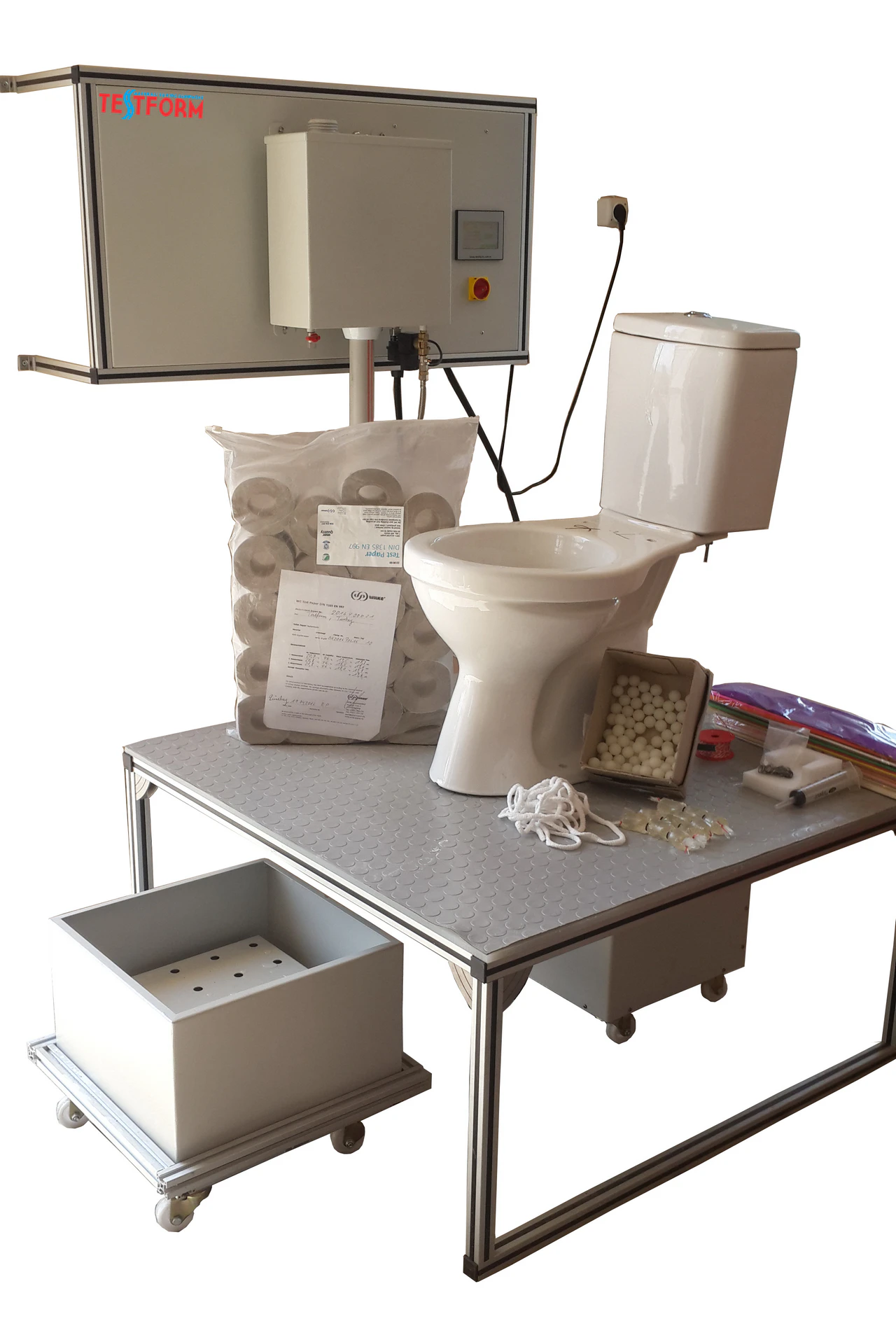
Removal of 50 small plastic balls - Experiment with fifty plastic balls
Elli_Adet_Plastik_ Top_Deneyi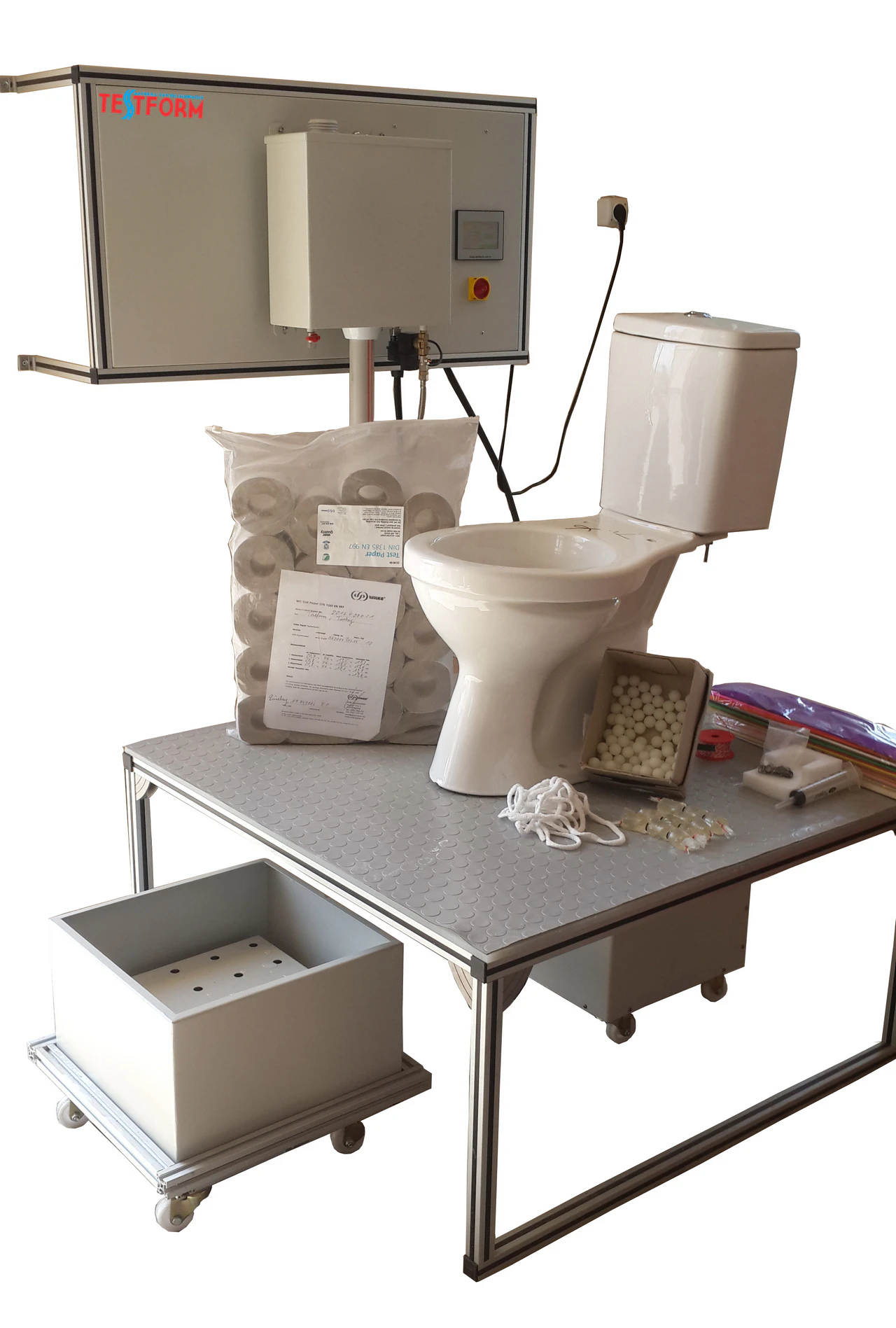
Toilet paper disposal - Toilet paper experiment
Tuvalet_Kâğıdı_Deneyi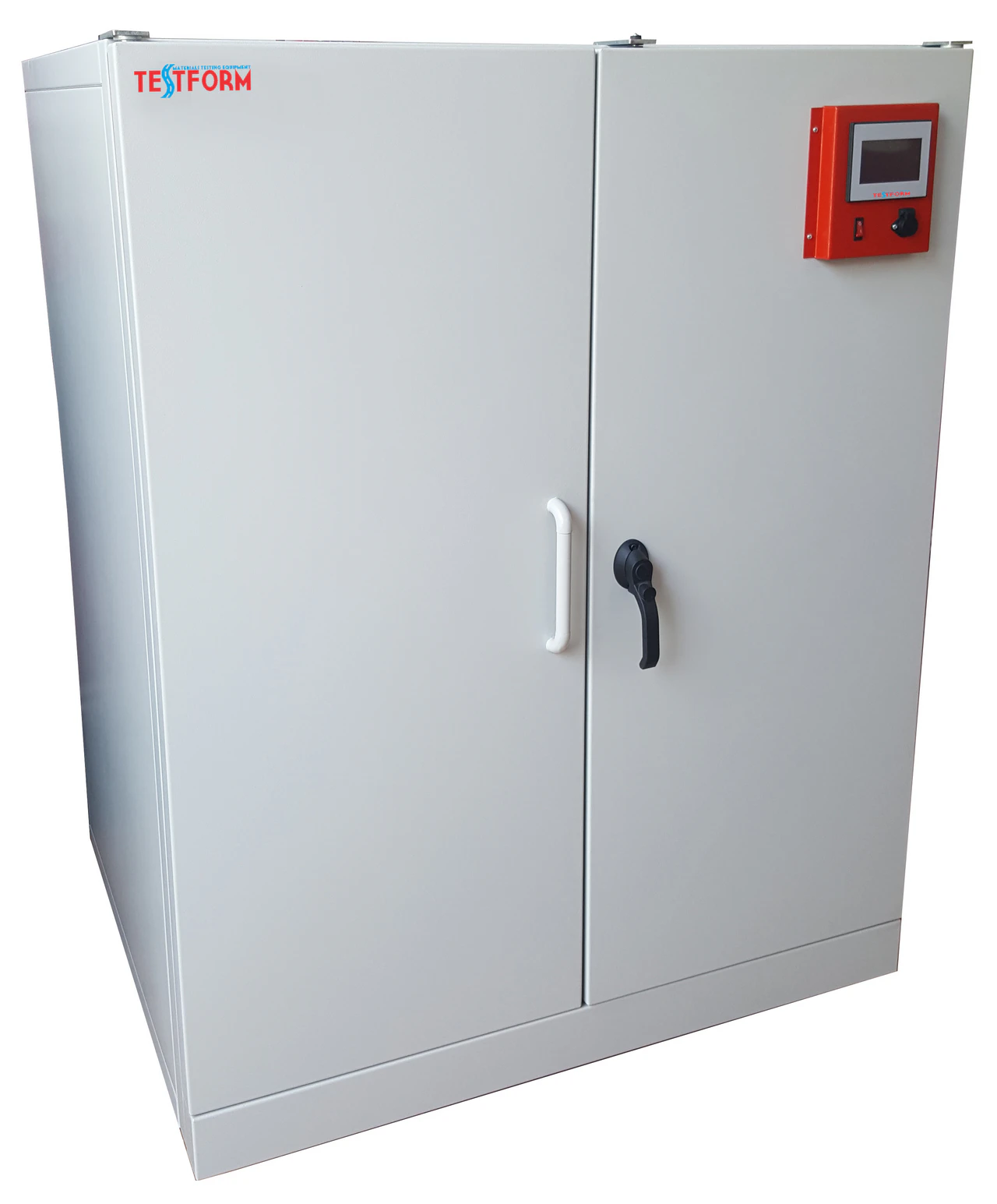
Water absorption
EN_997.2
Vacuum Testing Device
EN_997.5