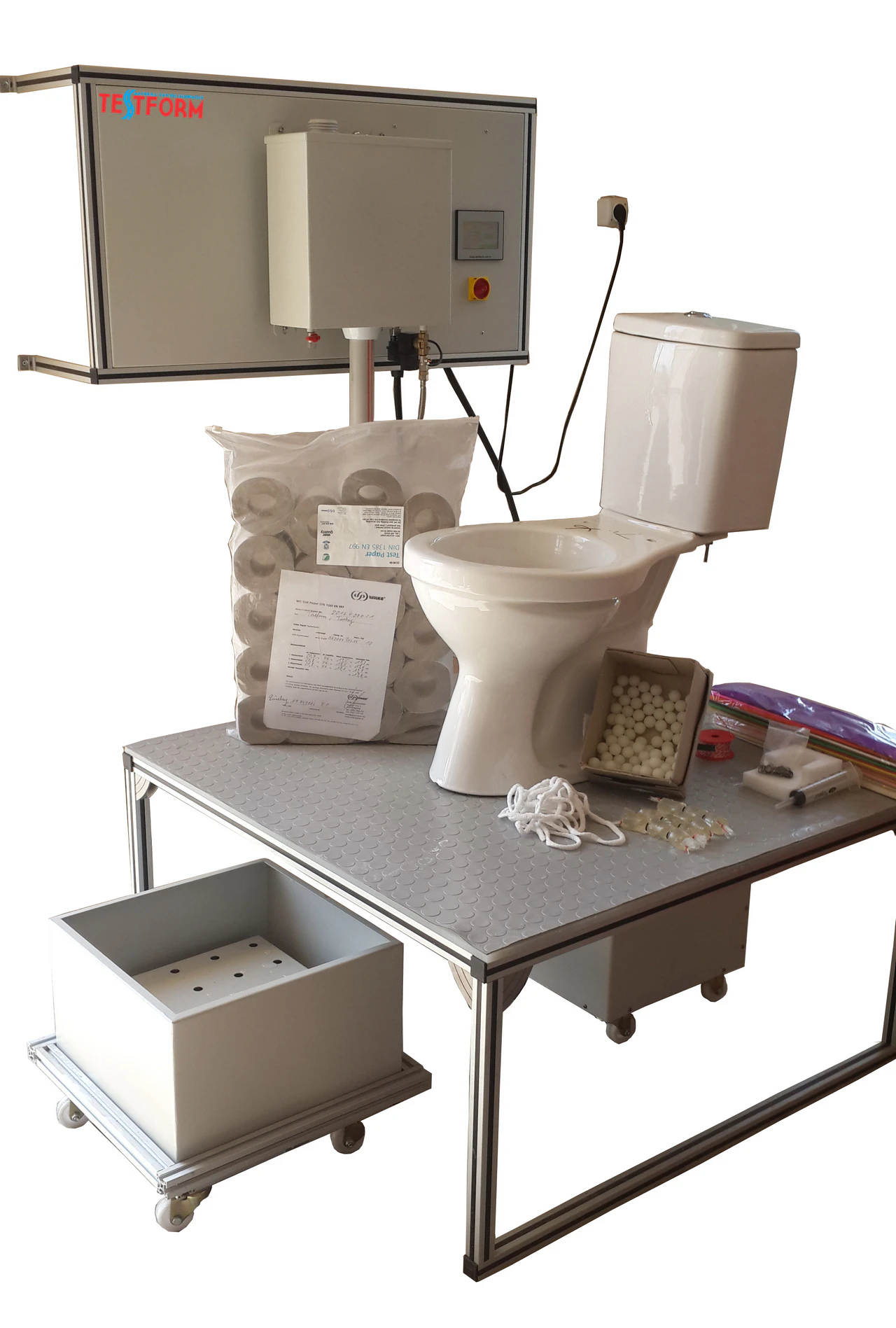
Water absorption
Product Code: EN_997.2
Categories:
EN 997 Standard and Water Absorption Test
According to the clauses of this standard, the evaluation method is explained in section 5.7.3. The following materials and methods are used for the determination of water absorption.
Test Materials and Equipment
- Balance (capable of weighing with 0.05 g accuracy)
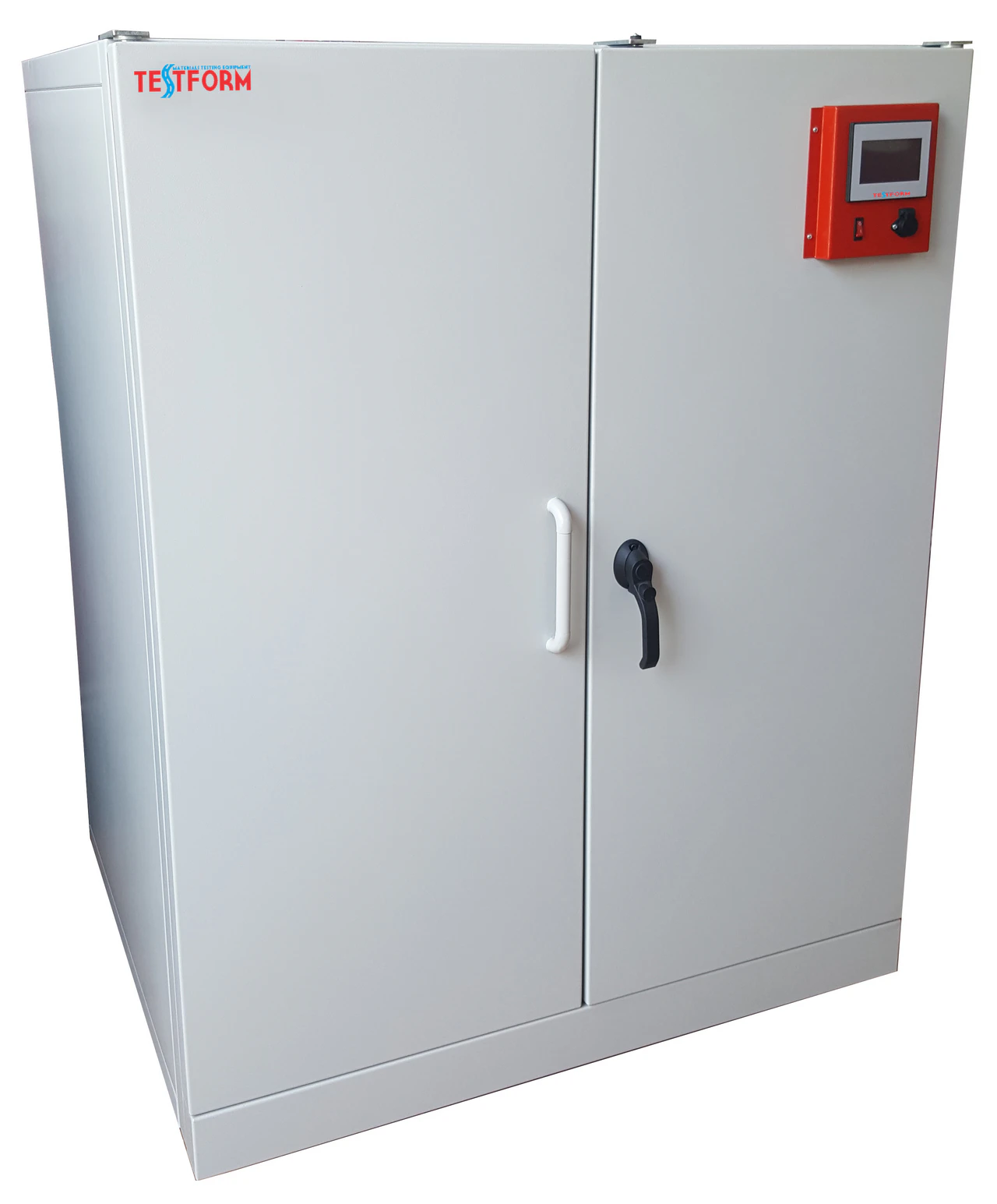
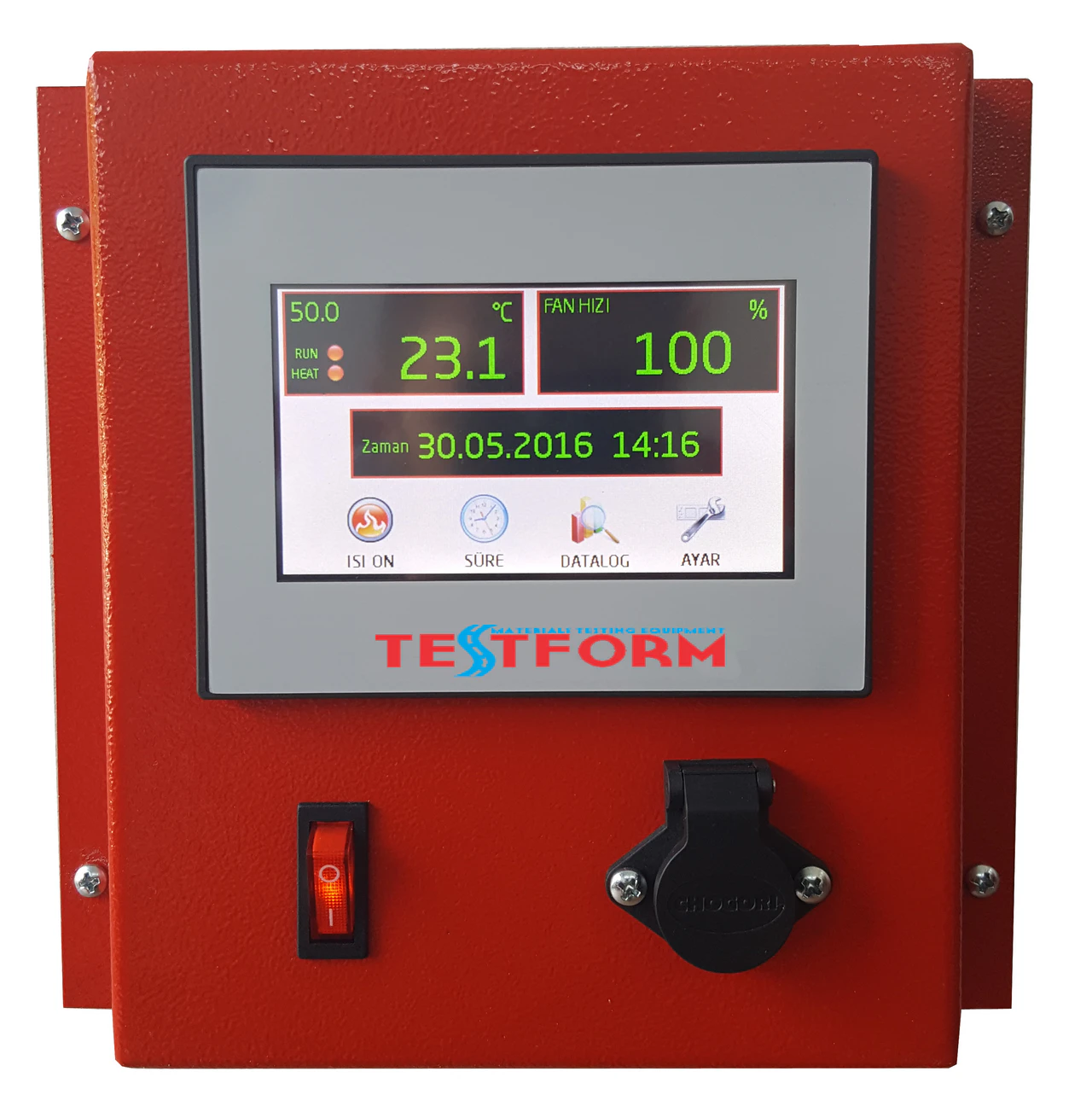
- Oven (capable of maintaining temperature at 105 ± 2 °C)
- Desiccator (with freshly prepared silica gel)
- Tongs
- Boiling pot (with temperature control)
- Demineralized water
- Fine-tipped spatula
- Fine brush
Test Method
- 3 samples are taken by breaking from the glazed surface of the toilet. The unglazed surface area of the samples should be approximately 30 cm², and the maximum thickness including glaze thickness should be approximately 12 mm.
- Samples are dried at 105 °C for (180 ± 5) minutes.
- Samples are cooled in a desiccator.
- Each sample is weighed with 0.05 g accuracy; this mass is m₀.
- Samples are placed into the boiling pot with the help of a fine-tipped spatula. Then, demineralized water is poured into the pot. It should be ensured that the samples do not touch the bottom or sides of the pot.
- Water is heated to boiling point for (120 ± 5) minutes. Then, the heating process is stopped and the samples are left in the container for another (20 ± 1) hours.
- Samples are immediately removed from water with the help of a fine-tipped spatula and dried by wiping lightly with tongs.
- The depressions and holes on the sample are dried with the help of a fine brush.
- Samples are immediately weighed; this mass is m₁.
- The water absorption coefficient in percentage is calculated separately for each sample using the following formula:

Related Products
Cleaning of the hopper - Chip experiment
Talaş_Deneyi
Water splash experiment
Su_Sıçraması_Deneyi
Washing Experiments Test Set
EN_997.1
Last water volume
Son_Su_Hacmi
Removal of 50 small plastic balls - Experiment with fifty plastic balls
Elli_Adet_Plastik_ Top_Deneyi
Loading test, Load-bearing test
EN_997.3
Relief valve reliability test
EN_997.4